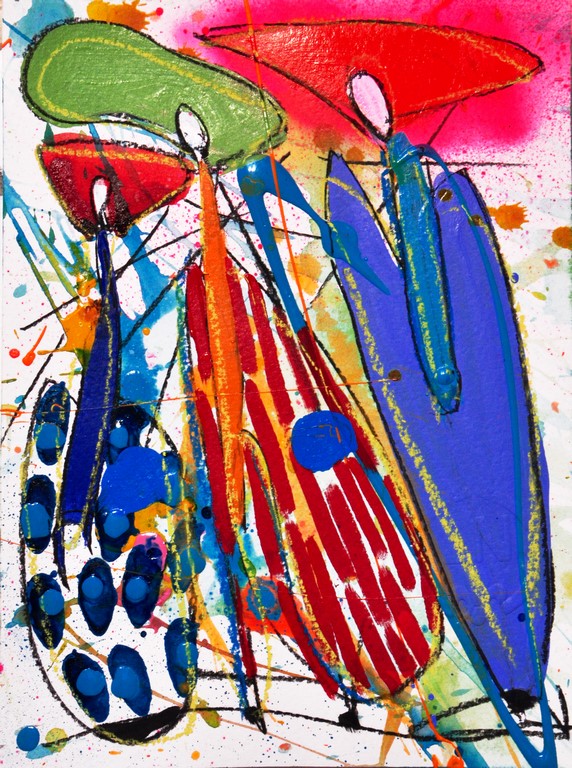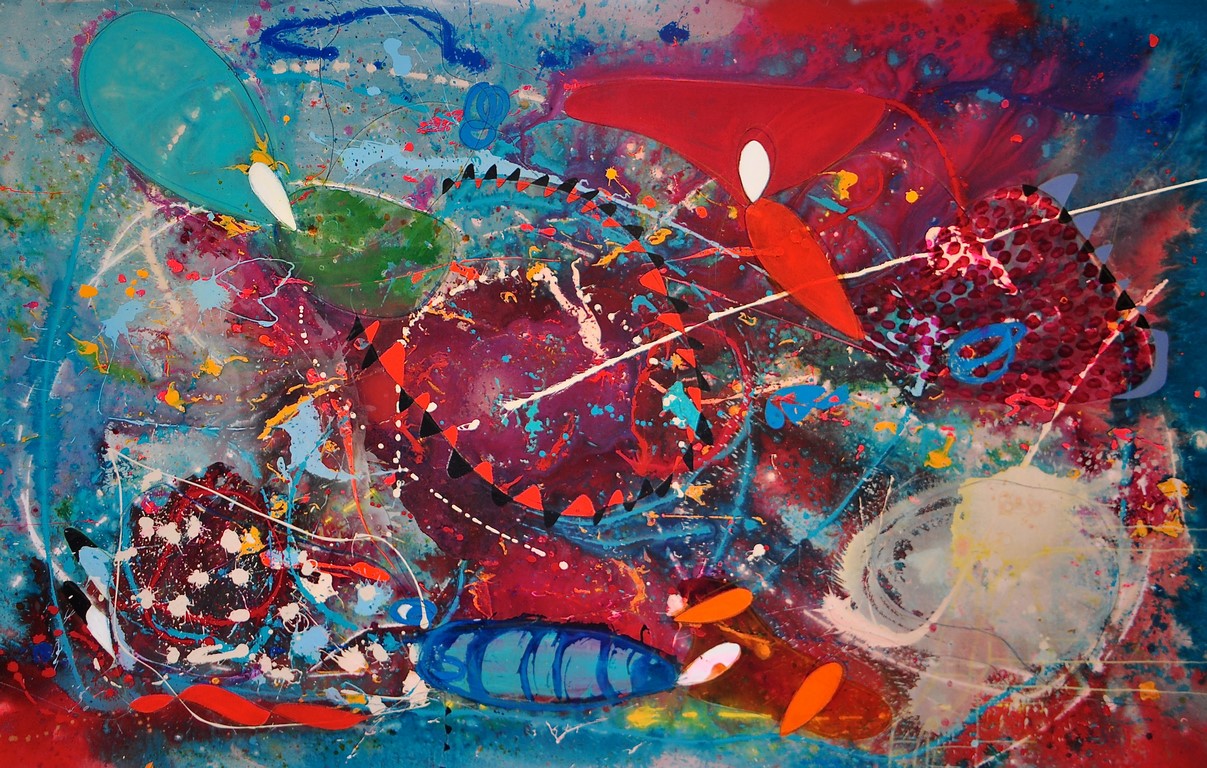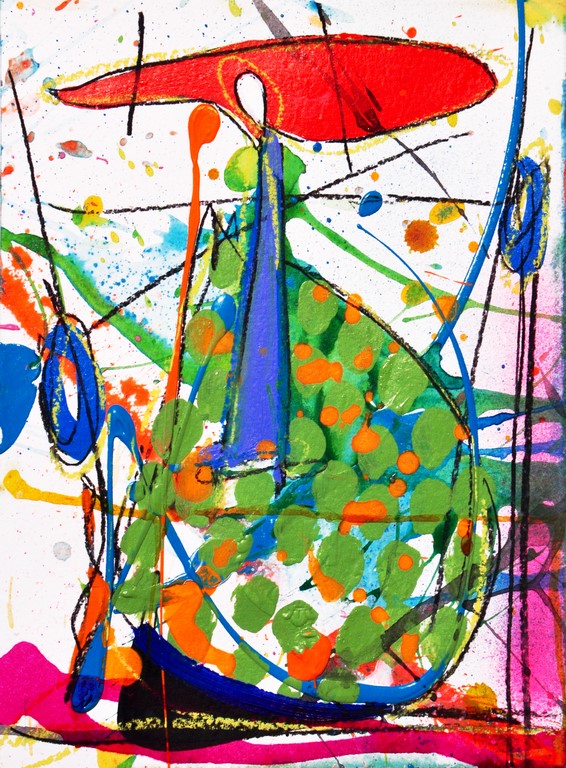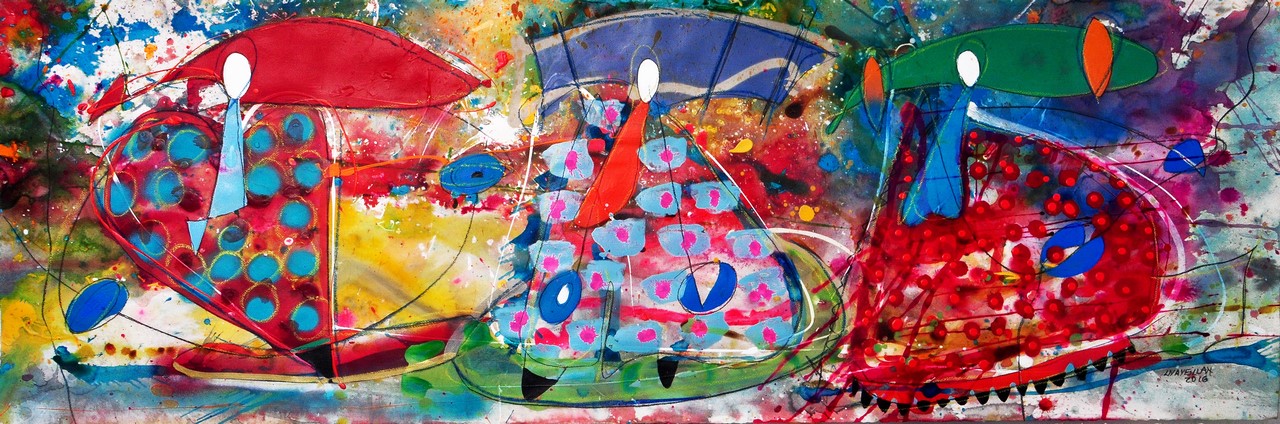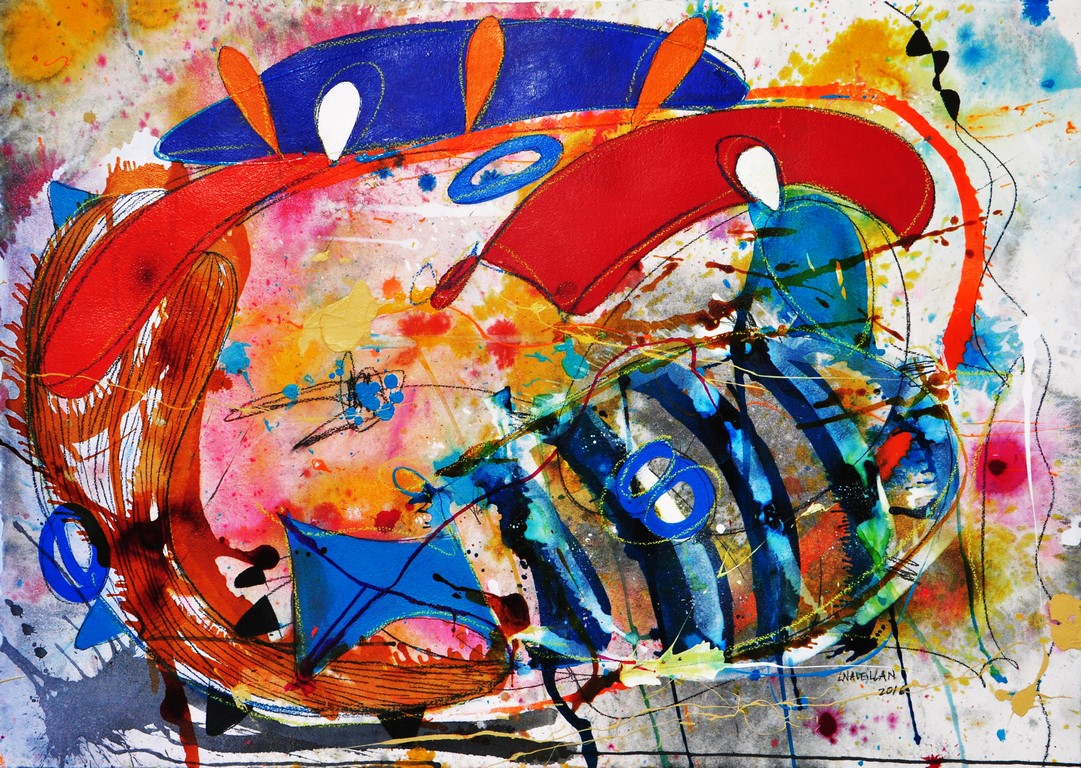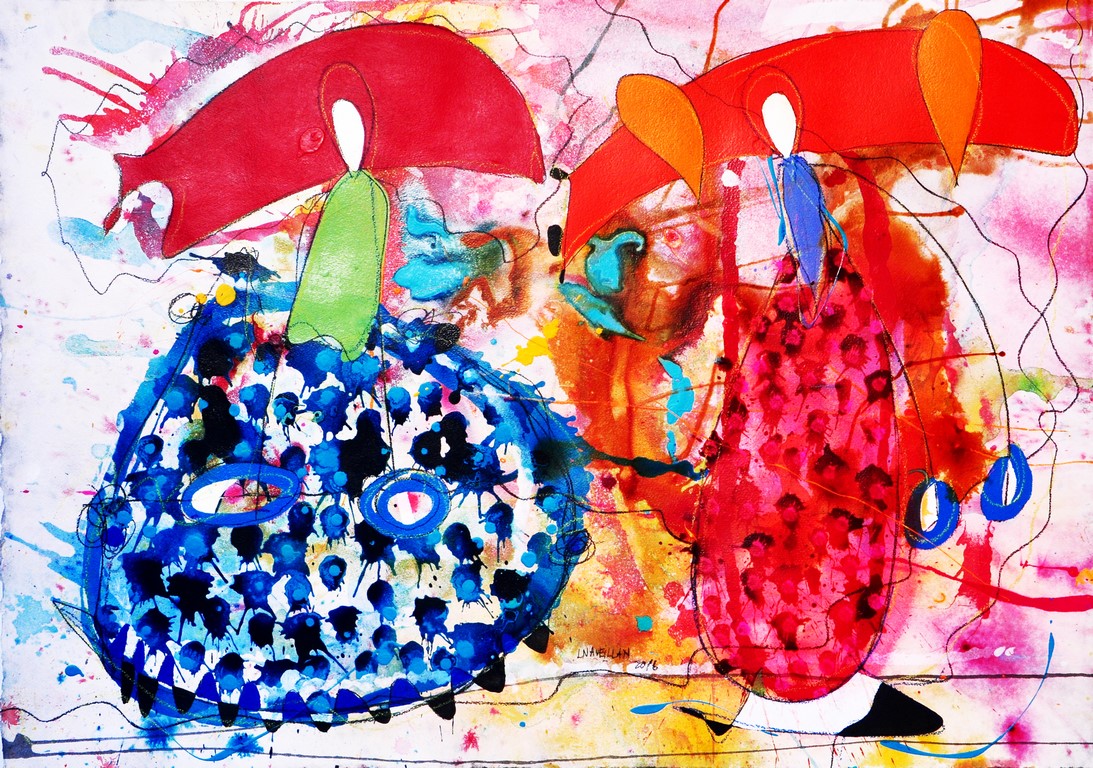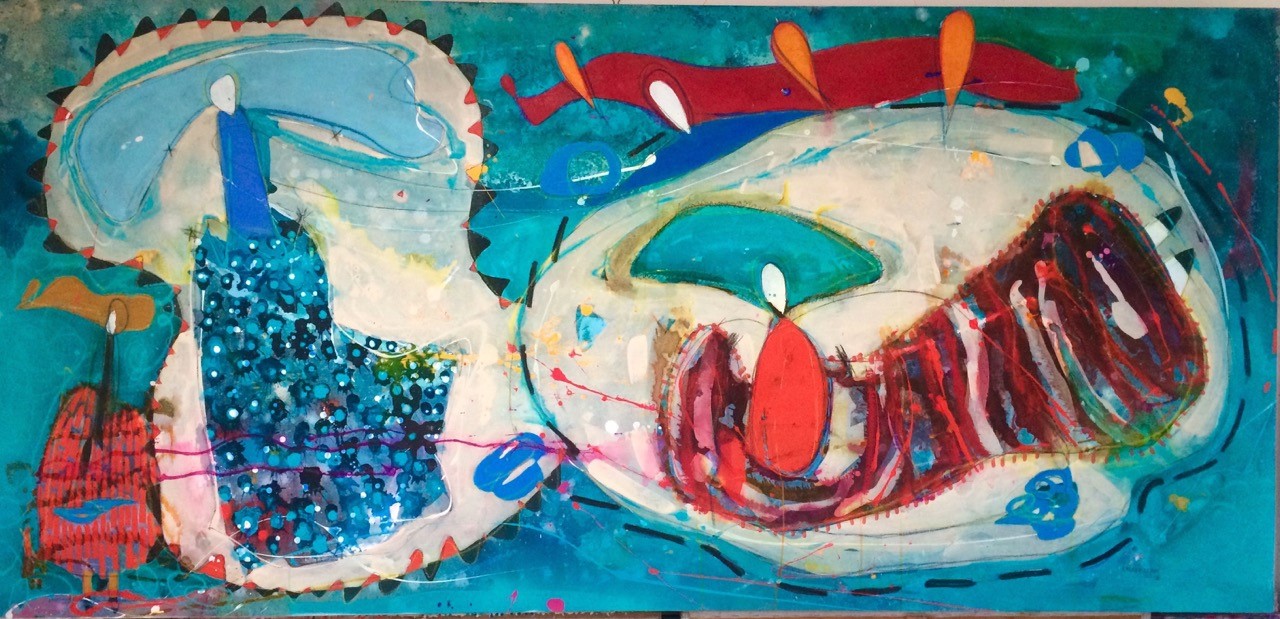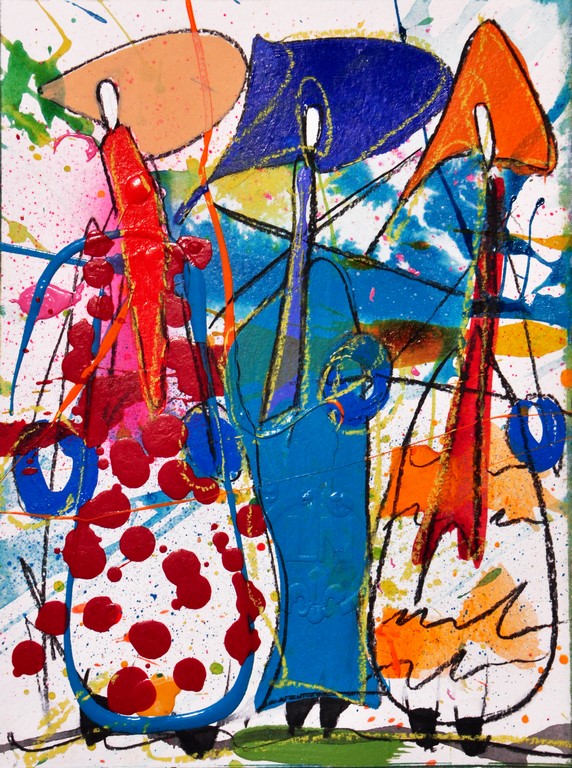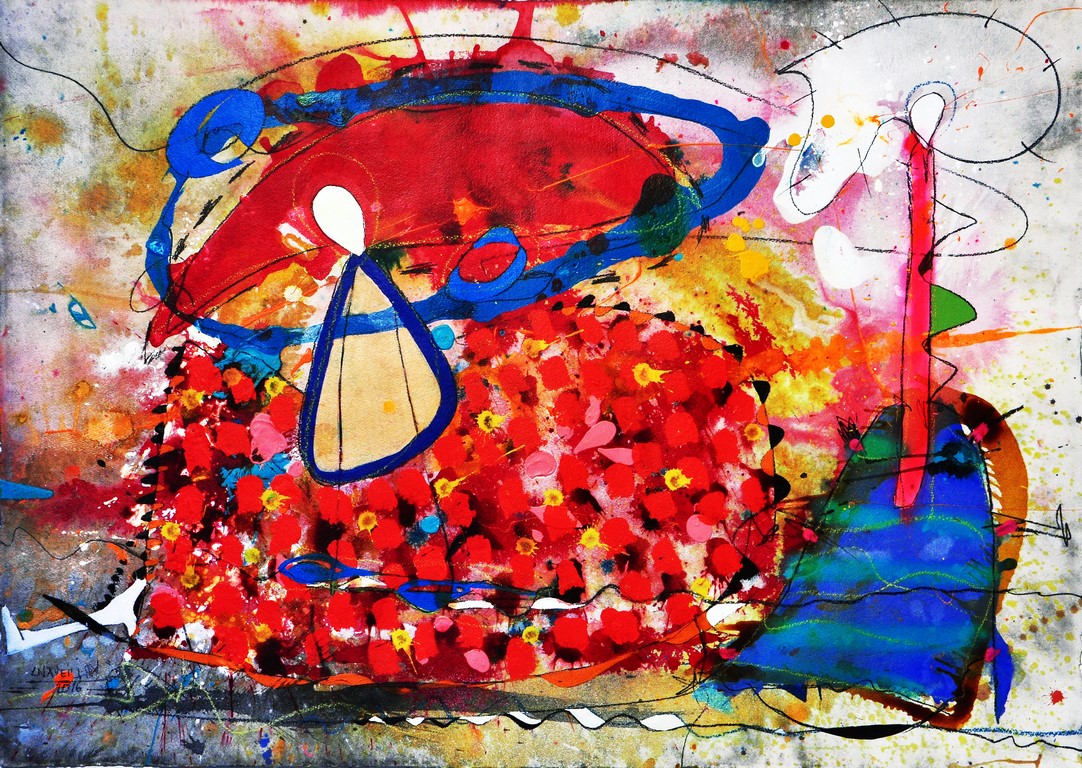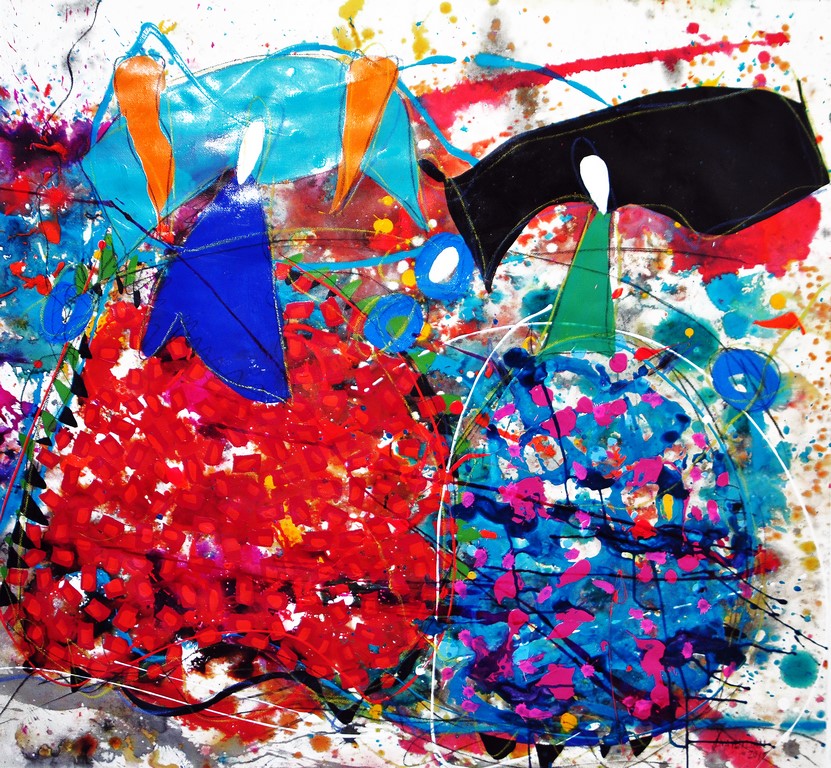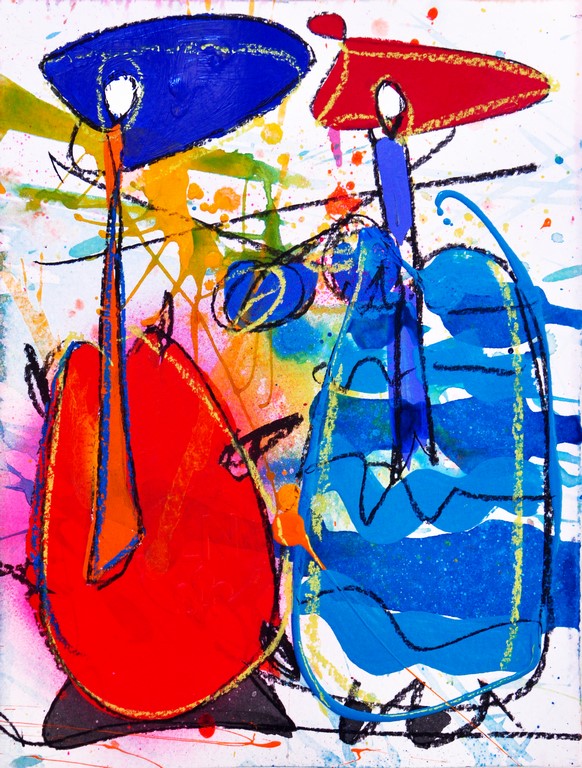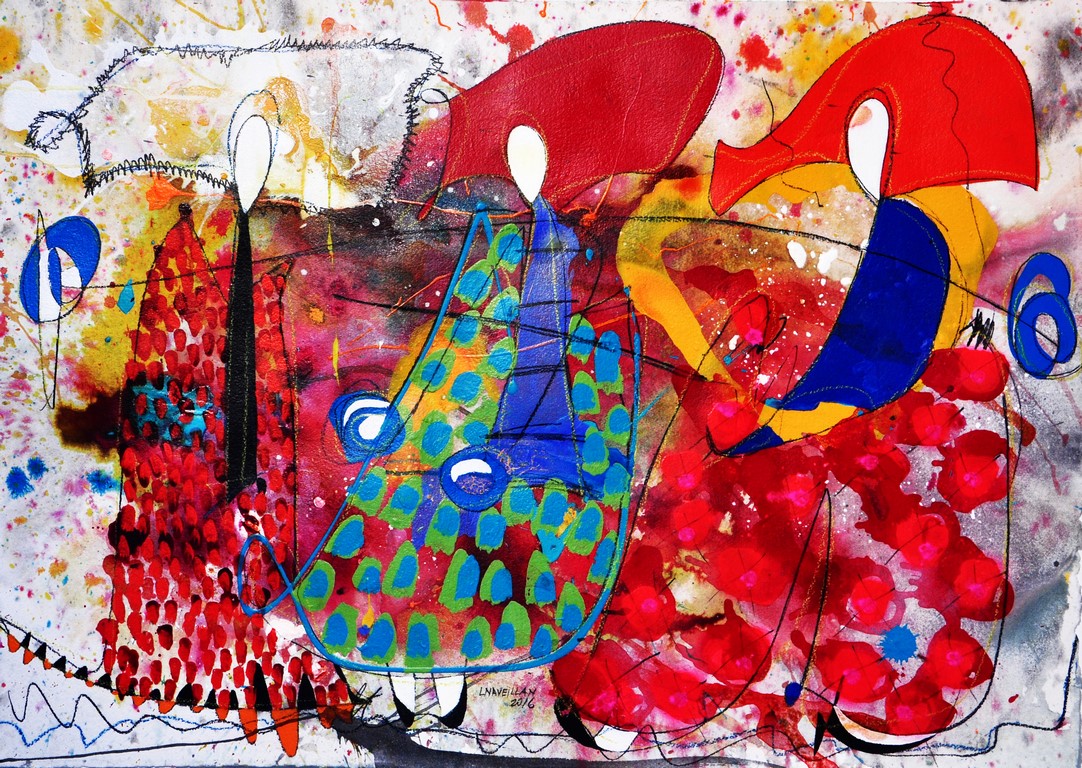
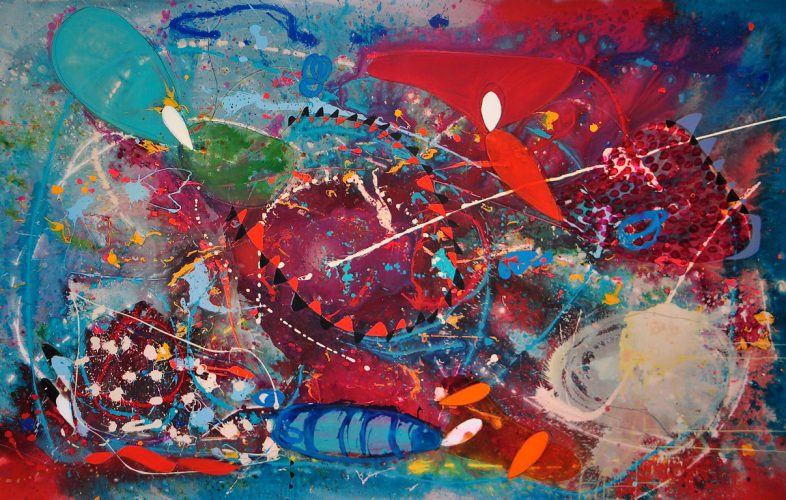
The imaginary world of Lourdes Naveillán is what the artist presents in this exhibition: the awareness and skill in exploiting this imaginary realm. Now, this is no small matter because the artist, in this case, is not only acknowledging the boundaries of this symbolic territory, but also its economy, its opening to the most hidden corners of her history and fantasies.
But what do we see when we look at these works? What is this imaginary world that Lourdes Naveillán offers us? First of all, the systematic repetition of a monad that persistently wanders through all her work, even in the sculptures. This symbol of the monad is, in a way, the epitome of 20th-century man, and it first appears in the work of Munch at the end of the 19th century. The term comes from the Greek “monas,” which means single, unity.
Second observation: these monads are serialized, expressed in groups; they are gatherings of figures assimilated into a kind of “spiritual force.” At the same time, within the space of the work, these monads are conceived as the active principle of movement; thus, they are the elements that detach themselves. Finally, the rest is the landscape, the chromatic unfolding, the luminous and primitive background, which gives form to this evocative journey about dualism, the indivisible and inextensive unity, and its immateriality.
Arturo Duclos, May 2016